The Ocean Is Their Home
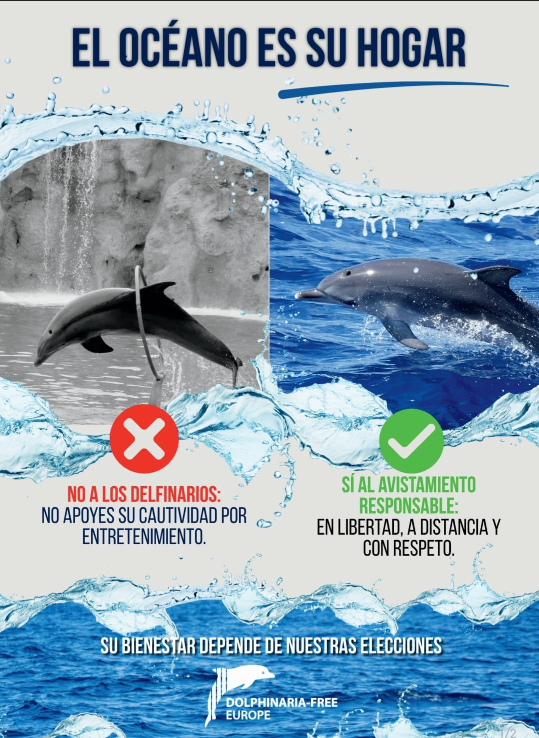
Whales, dolphins and other marine mammals are wild animals with complex behaviors, rich social lives and ecological needs that can only be fully met in their natural environment.
Observing them in the wild allows us to appreciate their true nature while understanding the importance of protecting the marine ecosystems on which they depend.Responsible whale and dolphin watching seeks to observe these animals in their natural habitat without disturbing their behaviour.
By contrast, cetaceans kept in captivity for human entertainment face severe limitations to their space, movement and the ability to express many of the natural behaviors that define their species.
In dolphinariums, every aspect of their lives — from the size and composition of their social groups to their diet, daily routines, interactions and resting periods — is controlled by humans.
Natural behaviour patterns of hunting, travelling, exploring and making choices disappear, while essential aspects of their lives, including reproduction, social dynamics and maternal care are profoundly altered.
These limitations have significant consequences for their welfare, replacing the complexity of the open ocean with a highly controlled environment that offers little opportunity for natural stimulation.
Spain has the highest number of dolphinariums in Europe, with ten facilities (eight currently in operation) and consequently the largest population of captive cetaceans on the continent.
This contrasts with a growing international trend away from keeping cetaceans in captivity, with at least 14 European Union countries no longer maintaining dolphinariums.
In light of this reality, we are proud to join the Dolphinaria-Free Europe Coalition’s campaign, promoting responsible whale and dolphin watching as an ethical alternative to dolphinariums.
Our commitment is to provide experiences founded on respect, education and conservation.
Every trip to sea is an opportunity to witness the extraordinary lives of whales and dolphins where they belong, deepen our understanding of the marine environment, and inspire its protection.